What's Sedentary Lifestyle? Definition, Risks and Easy Solutions
April 1, 2026 · Steplee Team · 7 min read
Contents
A sedentary lifestyle is now part of everyday life for millions of people. Between desk work, commuting, screen time, and evenings spent sitting, it is easy to go through long stretches of the day without moving much at all.
If you are asking what's sedentary lifestyle, the simple answer is this: it means spending too much time sitting or staying inactive during the day. And contrary to what many people think, it does not only affect people who never exercise. Someone can still work out from time to time and still have a sedentary lifestyle if most of the rest of the day is spent sitting.
Understanding this matters because sedentary habits can affect health, energy, and daily well-being. The good news is that small changes can help, especially when movement becomes more fun, more social, and easier to stick with.
What is a sedentary lifestyle exactly?
A sedentary lifestyle describes a routine in which a person spends a large part of their waking hours sitting or lying down while using very little energy. This includes working at a desk for long hours, watching TV, driving for extended periods, scrolling on a phone, or staying seated for long stretches without taking breaks.

In practice, the issue is not only a lack of exercise. The real problem is spending too much time without regular movement. The body is designed to move often, not stay still for hours at a time.
Sedentary lifestyle and physical inactivity are not the same thing
Physical inactivity means not getting enough overall movement or exercise during the week. A sedentary lifestyle refers more specifically to the amount of time spent sitting or being inactive during the day.
For example, someone may do a workout in the evening but still spend 8 to 10 hours sitting during work. In that case, the person is not necessarily fully inactive, but they may still have a sedentary lifestyle. That is why a single workout does not always fully make up for an entire day of sitting.
Why is a sedentary lifestyle a problem?
Sitting for too long is not harmless. Over time, the body tends to feel the effects of too little movement. A sedentary lifestyle is often associated with lower energy expenditure, stiffness or a heavy feeling, back, neck, or shoulder discomfort, feeling tired despite limited physical effort, and reduced mobility.
Beyond the physical side, it can also affect motivation, focus, and overall well-being. Moving more regularly during the day often helps restore a better rhythm.
Walking more is one of the easiest solutions
When people think about fighting sedentary habits, they often imagine intense workouts or major lifestyle changes. In reality, simply walking more is already a powerful step. Walking is accessible for most people, fits easily into everyday life, helps break up long sitting periods, and is easier to maintain over time.
A few simple habits can help: standing up regularly, walking during phone calls, taking short active breaks, getting off one stop earlier, going for a short walk after lunch, or aiming for a daily step goal. The goal is not perfection — the goal is to put movement back into a routine that has become too still.

Why doing it with someone else works better
Changing habits alone is not always easy. People often start motivated, then lose momentum once daily life takes over. That is why doing it with someone else can make a real difference. Walking with a partner makes the habit more engaging, more regular, and often more enjoyable — with your partner, a friend, or a coworker.
The idea is powerful because it turns movement into a shared daily challenge. Who will get the most steps today? Who will remember to move more often? That social layer makes movement feel lighter and more fun instead of another health obligation.

Steplee: making walking more fun and social
For many people, the hardest part is not understanding that they should move more. The hardest part is staying consistent. Work gets busy, routines take over, and hours pass before they even notice how long they have been sitting.
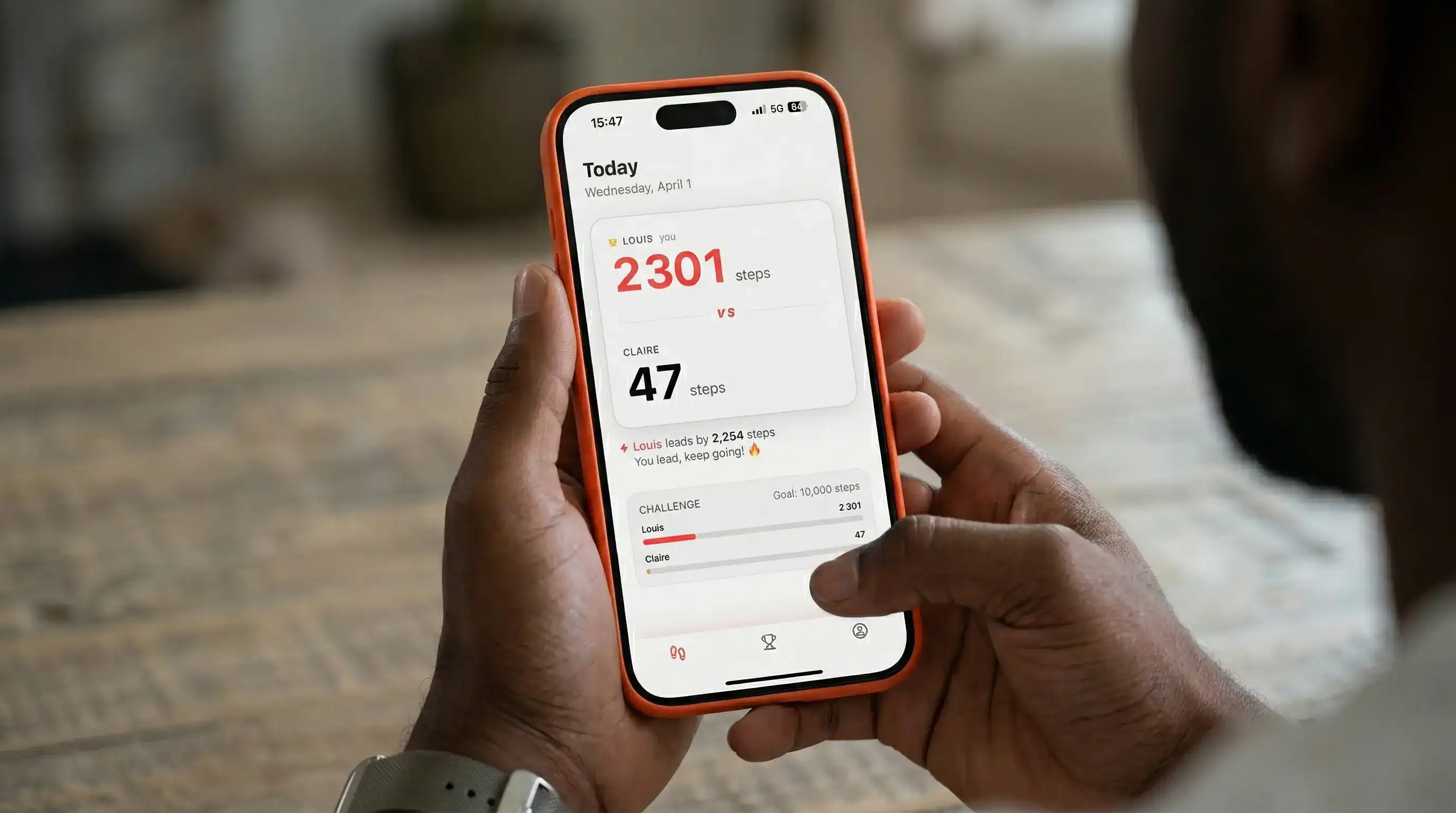
That is where Steplee can help. The app makes walking more visible, more motivating, and more playful. One of its strongest ideas is that it works best with two people — as a couple, with a friend, or even with a coworker. Instead of treating movement like a chore, Steplee turns it into a daily game: track your steps, compare progress, challenge each other, and break sitting habits more often.
Do you need to become sporty to reduce sedentary habits?
Not at all. Regular exercise is great, but reducing sedentary time does not mean you need to become highly athletic overnight. A much simpler first step is to walk more often, sit less for long periods, and add movement back into the day. That is already a meaningful and realistic way to improve your routine.
For many people, this first step matters the most. And when it becomes more enjoyable through a challenge with someone else, it is much easier to maintain.
Final thought
If you are wondering what's sedentary lifestyle, the key idea is simple: it is a way of living that includes too much sitting and not enough daily movement. It has become extremely common, even among people who think their routine is normal. One of the best ways to fight it is to walk more and break up long periods of inactivity — and if you do it with someone else, it often becomes easier to keep going.
Reduce sedentary habits with Steplee
Download the app